


SEASONAL WAREHOUSING: How Can Seasonal Businesses Manage Inventory Smartly Without Fixed Costs?
Seasonal businesses operate in a rhythm of sudden changes. One part of the year brings peak sales, larger orders, faster product turnover, and the need for additional space. The other part of the year often means reduced traffic, lower inventory levels, and more cautious cost planning. This is exactly why seasonal goods warehousing is becoming one of the most important logistics solutions for entrepreneurs in tourism, the fashion industry, holiday sales, the event industry, and all businesses that depend on seasonality.
The biggest challenge is not only where to store goods, but how to avoid unnecessary fixed costs during the months when warehouse space is not fully used. Companies that plan their seasonal logistics in advance can better control inventory, reduce operational stress, and maintain flexibility precisely when the market is at its most dynamic.
Why Is Seasonal Inventory Management So Challenging?
In seasonal businesses, demand rarely moves evenly. Tourism companies need space before the summer season for promotional materials, equipment, additional inventory, or products intended for sale. Fashion brands work with collections that change quickly. Retailers preparing for holiday sales often need to receive larger quantities of goods in advance, even though they only need increased warehouse capacity for a few weeks or months. The problem arises when a company has to choose between two less-than-ideal options: leasing its own warehouse space that will remain empty for part of the year, or operating with too little capacity and risking delays, congestion, and poorer product availability.
This is where seasonal goods warehousing becomes a practical solution, as it allows companies to use warehouse space only when it is truly needed, without tying up capital long term.
Fixed Costs Can Eat Into Seasonal Profit
Many seasonal businesses generate most of their revenue within a relatively short period. That is why every unnecessary monthly obligation becomes an additional burden. Warehouse rent, utilities, equipment, security systems, labor, and facility maintenance all create costs that continue even when sales slow down. If a warehouse is not occupied throughout the entire year, the company is essentially paying for capacity it does not use. This reduces profitability and makes it harder to invest in marketing, goods procurement, sales channel development, or customer support.
Flexible warehousing therefore becomes a smart way to manage costs. Instead of the company adapting to the space it has leased, warehouse capacity can be adapted to actual business needs.
What Does Seasonal Goods Warehousing Mean?
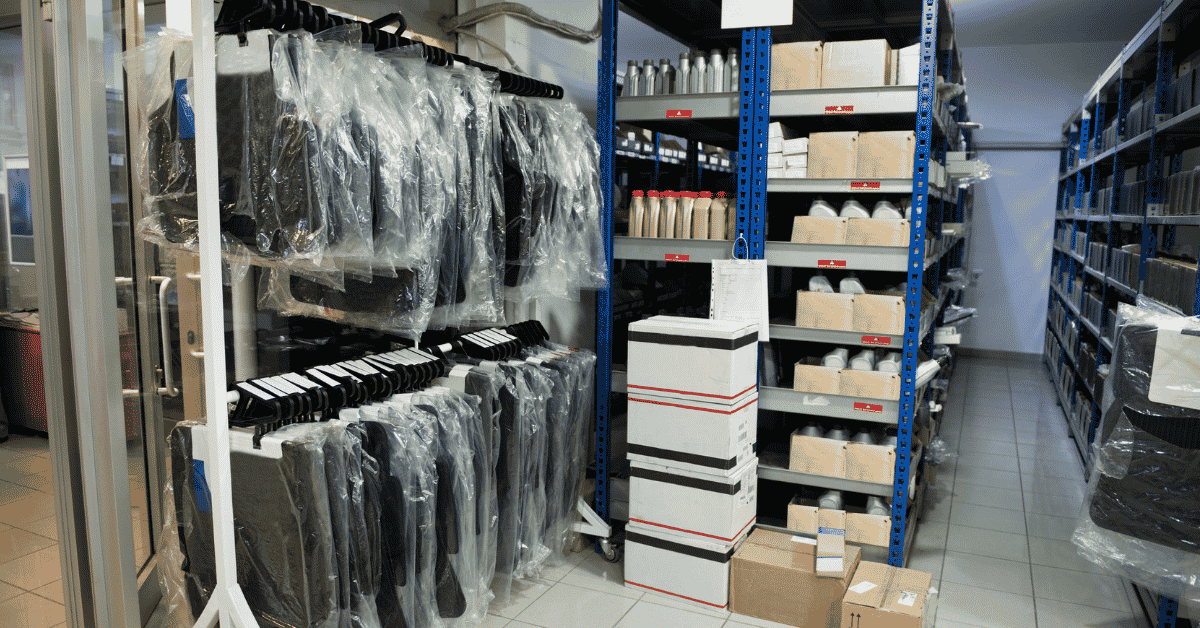
Seasonal goods warehousing refers to the temporary use of warehouse space for goods, equipment, packaging, or promotional materials during periods of increased demand. This may include preparation for the summer tourist season, the arrival of a new fashion collection, increased sales for Black Friday, Christmas, Easter, or any other sales peak. The advantage of this model is that the company does not need to invest in its own warehouse infrastructure. Warehouse space is used as needed, while costs are easier to predict and more closely connected to actual turnover. For seasonal entrepreneurs, this means greater control, less risk, and simpler planning.
Benefits of Flexible Warehousing for Seasonal Businesses
The greatest advantage of flexible warehousing is scalability. When the quantity of goods increases, warehouse capacity can be expanded. When the season ends, capacity can be reduced. In this way, the company avoids long-term obligations that are not aligned with the rhythm of its business. Another important benefit is better inventory organisation. Goods that are properly received, labelled, and stored are easier to track, quicker to locate, and simpler to distribute. This is especially important during the season, when speed and accuracy of delivery are key to customer satisfaction. A third benefit is relieving the internal team. Instead of employees dealing with improvised storage, moving boxes, or searching for goods, they can focus on sales, customer support, and operational tasks that directly affect revenue.
Examples of Industries That Especially Benefit From Seasonal Warehousing
In tourism, the need for warehouse space often increases before the start of the main season. Hotels, campsites, agencies, souvenir shops, and hospitality businesses may need space for additional equipment, consumables, promotional items, or products intended for guests. In the fashion industry, seasonality is even more pronounced. Collections change several times a year, and goods must be available at the right time. Too much inventory in the wrong space can slow down operations, while a lack of space can jeopardise a collection launch. Holiday sales also require precise planning. Retailers often receive larger quantities of goods in advance, but need additional space only in the short term. Flexible warehousing allows them to prepare for increased demand without unnecessary long-term costs.
How to Plan Seasonal Inventory Smartly
Good inventory management begins with an analysis of previous seasons. Companies should track which product categories sold the fastest, where delays occurred, how much stock remained unsold, and during which period warehouse capacity was under the greatest pressure. Based on this data, it becomes easier to estimate how much space is needed, when it should be activated, and how long it makes sense to use it. It is important to plan both the inbound and outbound flow of goods: it is not enough simply to store products; they must also be quickly prepared for distribution, the sales location, or the end customer. Special attention should be paid to labeling goods, maintaining clear visibility of storage units, and ensuring timely communication with the logistics partner. The clearer the processes are before the start of the season, the lower the likelihood of mistakes during the busiest period.
Seasonal Goods Warehousing as a Way to Reduce Risk
Seasonal business always involves a certain level of uncertainty. Demand may be higher than expected, suppliers may be late, weather conditions may affect sales, and trends can change quickly. Fixed warehouse costs add further pressure because the company has to pay for capacity regardless of the season’s results. Flexible warehousing helps reduce this risk. A company can react faster, increase or decrease the amount of goods in storage, and better align logistics costs with real needs. This is especially important for small and medium-sized entrepreneurs who do not have large capital reserves but still need to remain competitive during periods of increased demand.
What to Consider When Choosing a Warehouse Partner
When choosing a partner for seasonal goods warehousing, it is not enough to look only at price. It is important to check the security of the facility, the availability of goods, the ability to adjust capacity, the quality of inventory records, and the speed of communication. A good warehouse partner understands that seasonal businesses do not always have the same needs. Sometimes short-term space availability is crucial, sometimes the speed of goods receipt, and sometimes the ability to organize returns after the season ends. The ideal solution is one that allows the company to maintain control over its inventory, but without the burden of owning a warehouse, hiring additional employees, or entering long-term contracts that are not suited to seasonal business.
Flexible Warehousing as an Advantage in Seasonal Business
Seasonal businesses do not have to choose between expensive warehouse ownership and chaotic goods management during periods of peak demand. With well-planned seasonal goods warehousing, it is possible to secure enough space exactly when it is needed, without unnecessary fixed costs throughout the rest of the year. For entrepreneurs in tourism, the fashion industry, holiday sales, and other seasonal sectors, flexible warehousing is not just a logistics convenience. It is a way to manage money more effectively, reduce operational risk, and be better prepared for every new season. Smart inventory management begins with timely planning and ends with a solution that grows and scales down together with the business.